

Why Cable Labels and Documentation Matter
September 5th, 2027
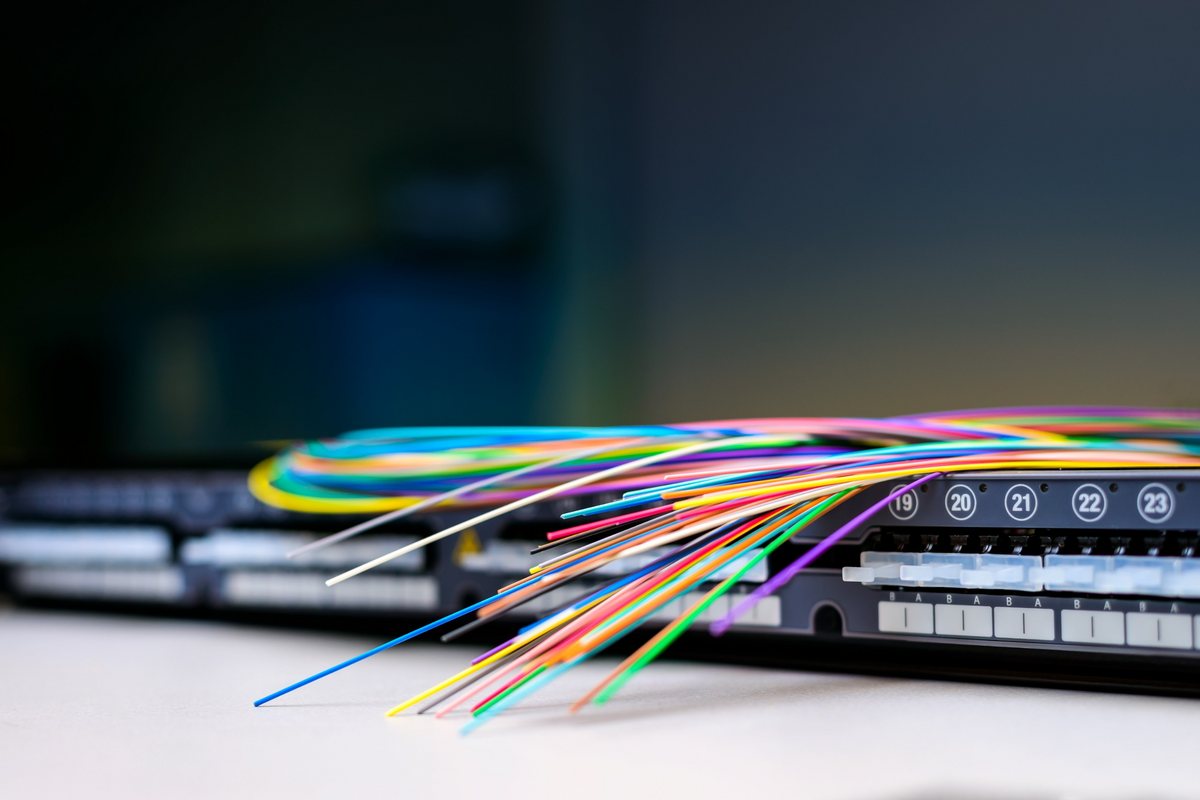
Nobody has ever walked into a network closet, seen a beautifully labeled patch panel, and said, "This is the most exciting thing I have ever seen." But nobody has ever had a good time tracing an unlabeled cable either.
Labels and documentation are the quiet heroes of a cabling installation. They do not make the network faster. They do not show up in a sales presentation. They just save an enormous amount of time when something goes wrong, when someone new takes over, or when the business decides to move a wall.
The 5 p.m. test
Imagine a cable fails at 4:55 p.m. on a Friday. The port is live, but nobody knows which desk it feeds. With good labels, someone checks the panel, reads the label, and walks straight to the right outlet. The fix is quick. Everyone goes home.
Without labels, the same problem becomes a group project. Someone unplugs a cable and waits for a call. Someone else checks the floor plan. A third person tries the old "talk to me while I move this" method. It gets solved eventually, but the clock keeps running.
That is the real value of labeling. It turns a mystery into a lookup.
What a good label tells you
A label does not need to be fancy. It needs to be readable, durable, and consistent. At minimum, both ends of every run should identify where the cable goes. A good labeling scheme might also include:
- The outlet or room the cable serves
- The patch panel and port number
- The type of cable or service
- A unique cable identifier that matches the documentation
The exact scheme matters less than consistency. If everyone uses the same language, anyone can follow the trail. If labels are handwritten in three different styles and half of them have faded, the system is only decorative.
Documentation that actually gets used
Labels are the first layer. Documentation is the map. A good document shows what is connected where, how the cabling is routed, and what the network looks like at the physical level. It is not just a nice-to-have for auditors. It is a practical tool for everyday work.
Useful documentation usually includes:
- As-built floor plans showing outlets and pathways
- Patch panel schedules
- Photographs of the installation before the ceiling closes
- Test results for each run
- A record of changes, including adds, moves, and replacements
The last item is the one most businesses skip. A perfect set of drawings from five years ago is not as useful as a slightly messy set that has been updated every time something changed. Documentation is a living thing, not a one-time deliverable.
The move-add-change test
Here is a simple way to judge your current documentation: think about the next small change. A new hire needs a phone. A team wants to add a printer. A conference room needs another network drop.
Can someone figure out where to connect it without opening three ceiling tiles and guessing? If yes, your documentation is doing its job. If no, the next project is going to take longer than it should.
Good documentation does not make changes free. It makes them predictable. That is almost as valuable.
Ask for it before the crew leaves
If you are planning a cabling installation, put labeling and documentation in the scope of work. Do not assume it is included just because the cables look neat. Ask what you will receive, who will update it later, and where it will live.
A few questions worth asking:
- Will every cable be labeled at both ends?
- Will we receive as-built drawings and patch schedules?
- Will test results be provided?
- Who updates the documentation when something changes?
- Can we get the files in a format we can actually edit?
The answers should be straightforward. If they are not, that is useful information too.
A small investment with a long shelf life
Labels and documentation cost a little time and money upfront. They pay it back every time someone needs to troubleshoot, expand, or hand off the network. They also make your cabling partner's work easier to verify, which is never a bad thing.
Future-you will not remember which cable goes where. Future-you will be glad someone wrote it down. Our cabling team labels and documents every installation we do. Contact us if you would like to see what that looks like for your space.
Posted in: Structured Cabling